Livestock Farming Trade Subject Practical Guide for Secondary School Students
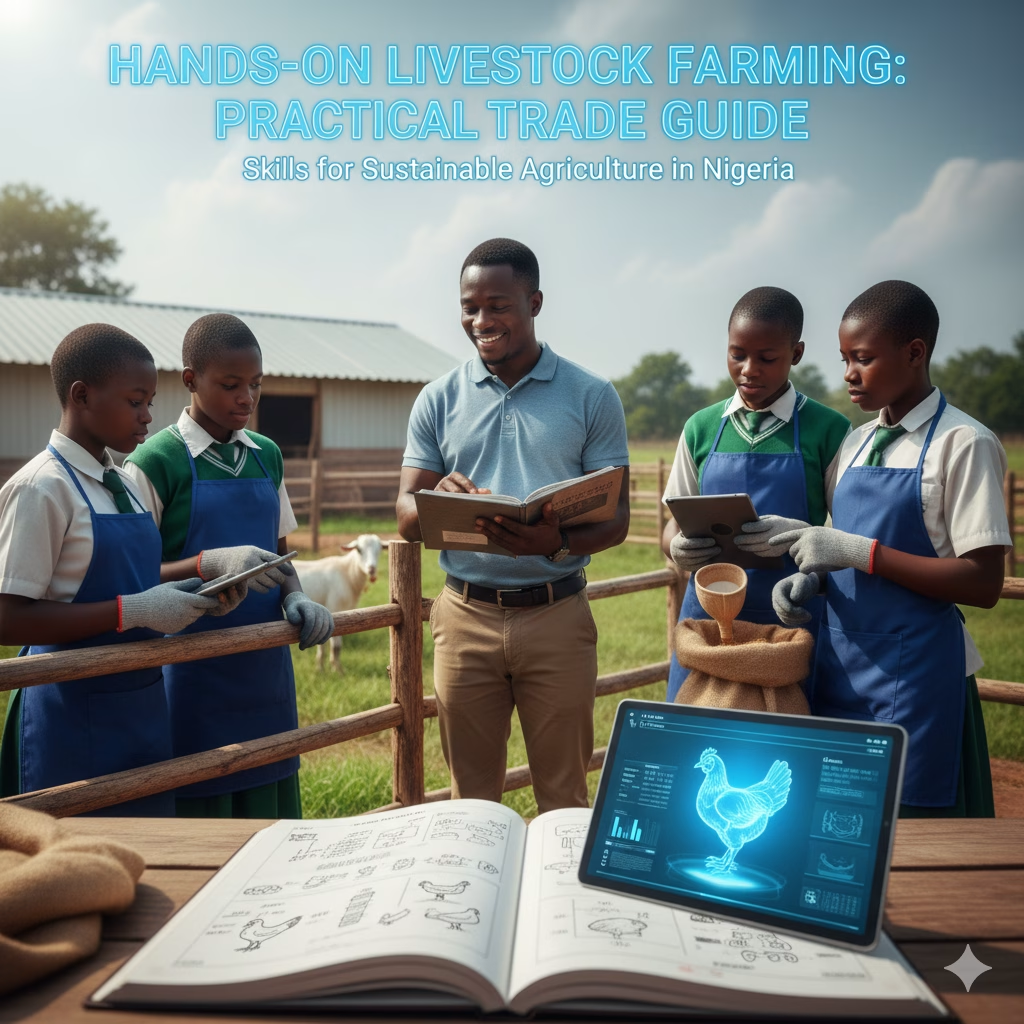
Livestock Farming is a key trade subject offered in Nigerian secondary schools, especially within the vocational and agricultural science curriculum.
This subject equips students with practical skills in animal husbandry, helping them gain knowledge that can lead to self-reliance, entrepreneurial opportunities, and careers in agriculture.
In this article, we provide a comprehensive practical guide for Livestock Farming, including core topics, hands-on activities, benefits, tools, and career paths for students.
What is Livestock Farming?
Livestock Farming involves the rearing, breeding, and management of domestic animals such as cows, goats, sheep, poultry, pigs, and rabbits for food, profit, or other purposes. It is a practical agricultural trade subject that teaches students how to:
-
Care for animals properly
-
Increase productivity through good management
-
Apply scientific principles to farming
-
Maintain healthy and profitable livestock
Livestock farming combines theoretical knowledge and practical skills, making it one of the most useful vocational subjects for secondary school students.
Related: Animal Husbandry Practical Guide for WAEC Students (Complete Exam Preparation)
Importance of Livestock Farming in Secondary Schools
-
Skill Acquisition: Students gain hands-on skills in animal care and management.
-
Entrepreneurship: Students can start small-scale livestock businesses.
-
Food Security: Prepares students to contribute to local and national food supply.
-
Career Preparation: Opens opportunities in veterinary, agricultural business, and research fields.
-
Self-Reliance: Encourages independence and financial management through livestock trade.
By studying livestock farming, students are equipped with practical knowledge that can be applied immediately in real-life agricultural activities.
Core Practical Areas in Livestock Farming
The practical aspect of livestock farming covers a variety of hands-on topics. Students are expected to engage in supervised activities in school farms or at home.
1. Animal Housing and Shelter
-
Activities: Construct proper pens, coops, or enclosures for different animals.
-
Skills Learned: Designing safe, clean, and comfortable housing for livestock.
-
Objective: Prevent diseases and enhance productivity.
2. Feeding and Nutrition
-
Activities: Prepare balanced feed, mix grains, and calculate feed requirements.
-
Skills Learned: Understanding the nutritional needs of various livestock.
-
Objective: Promote healthy growth, reproduction, and high yield.
3. Breeding and Reproduction
-
Activities: Identify male and female animals, track reproductive cycles, and assist in breeding.
-
Skills Learned: Understanding mating systems, artificial insemination basics, and genetic improvement.
-
Objective: Improve livestock quality and production.
4. Health Management and Disease Control
-
Activities: Observe animals for signs of illness, administer vaccines, and maintain hygiene.
-
Skills Learned: Recognizing common diseases and preventive measures.
-
Objective: Ensure a healthy and productive livestock population.
Read now: WAEC 2026 Subject Combinations for Nursing: Complete Guide for Aspiring Nurses
5. Milking and Production Management (for dairy farming)
-
Activities: Practice proper milking techniques, milk storage, and hygiene.
-
Skills Learned: Handling milk safely and maximizing dairy production.
-
Objective: Provide clean milk and other dairy products for consumption or sale.
6. Record Keeping and Farm Management
-
Activities: Maintain daily records of feed, growth, health, and production.
-
Skills Learned: Monitoring performance, planning, and farm decision-making.
-
Objective: Track productivity and identify areas for improvement.
7. Slaughtering and Meat Processing (optional in some curricula)
-
Activities: Learn humane methods of slaughtering, handling meat, and basic preservation.
-
Skills Learned: Food hygiene, safety standards, and meat production.
-
Objective: Ensure safe meat supply and reduce post-harvest losses.
Tools and Equipment for Livestock Farming
Students are taught to use basic tools safely for effective livestock management, including:
-
Feeding troughs and water containers
-
Vaccination and medicine equipment
-
Milking machines or stools
-
Fencing tools and construction equipment
-
Hygiene and cleaning materials
-
Record books and pens for documentation
Proper use of these tools ensures safety, efficiency, and practical learning for students.
Benefits of Learning Livestock Farming
-
Practical Knowledge: Students gain hands-on experience in animal husbandry.
-
Income Generation: Livestock farming provides revenue from meat, milk, eggs, and breeding.
-
Entrepreneurship Development: Students can start farms or sell farm products.
-
Agricultural Awareness: Students understand the role of livestock in food production.
-
Skill Versatility: Knowledge can be applied in small-scale farms, commercial farms, or research.
Career Opportunities in Livestock Farming
Studying livestock farming opens several career paths for students, including:
Read more: 6 Approved Trade Subjects for Non-Technical Schools in 2026: Complete Guide
-
Livestock farmer or poultry farmer
-
Dairy farm operator
-
Veterinary technician or assistant
-
Agricultural extension officer
-
Meat production and processing specialist
-
Entrepreneur in animal feed production or livestock trade
Even students who continue academic studies can combine livestock farming with other agricultural or business courses.
Tips for Excelling in Livestock Farming Trade Subject
-
Observe Carefully: Pay attention to animal behavior, health, and growth.
-
Practice Regularly: Engage in feeding, cleaning, and record-keeping consistently.
-
Keep Detailed Records: Document observations, production, and farm activities.
-
Stay Hygienic: Maintain clean housing and personal hygiene to prevent diseases.
-
Ask Questions: Learn from teachers, farm managers, or experienced farmers.
-
Experiment Safely: Apply theoretical knowledge to practical situations under supervision.
By combining practical experience with theoretical understanding, students excel in both WAEC and school assessments.
Conclusion
The Livestock Farming trade subject equips secondary school students in Nigeria with practical skills, entrepreneurial abilities, and knowledge of animal husbandry.
From feeding, breeding, and housing to disease management and record-keeping, students learn how to manage animals effectively for profit, food production, and career development.
By mastering livestock farming, students not only prepare for WAEC trade exams but also gain skills that can turn into profitable businesses or rewarding careers in agriculture.
This makes Livestock Farming a valuable subject for self-reliance, entrepreneurship, and practical education.


