Livestock Farming Practical Guide for WAEC Students (Complete Study & Exam Success Guide)
Livestock farming is one of the most important and practical topics in WAEC Agricultural Science. Many students struggle not because the topic is difficult, but because they do not understand how to apply theory to real farm practices.
This Livestock Farming Practical Guide for WAEC students is designed to help students understand key concepts, perform well in practical exams, and confidently answer theory questions.
This guide is written for WAEC candidates, Agricultural Science teachers, and secondary school students who want a clear, simple, and exam-focused explanation of livestock farming.
What Is Livestock Farming?
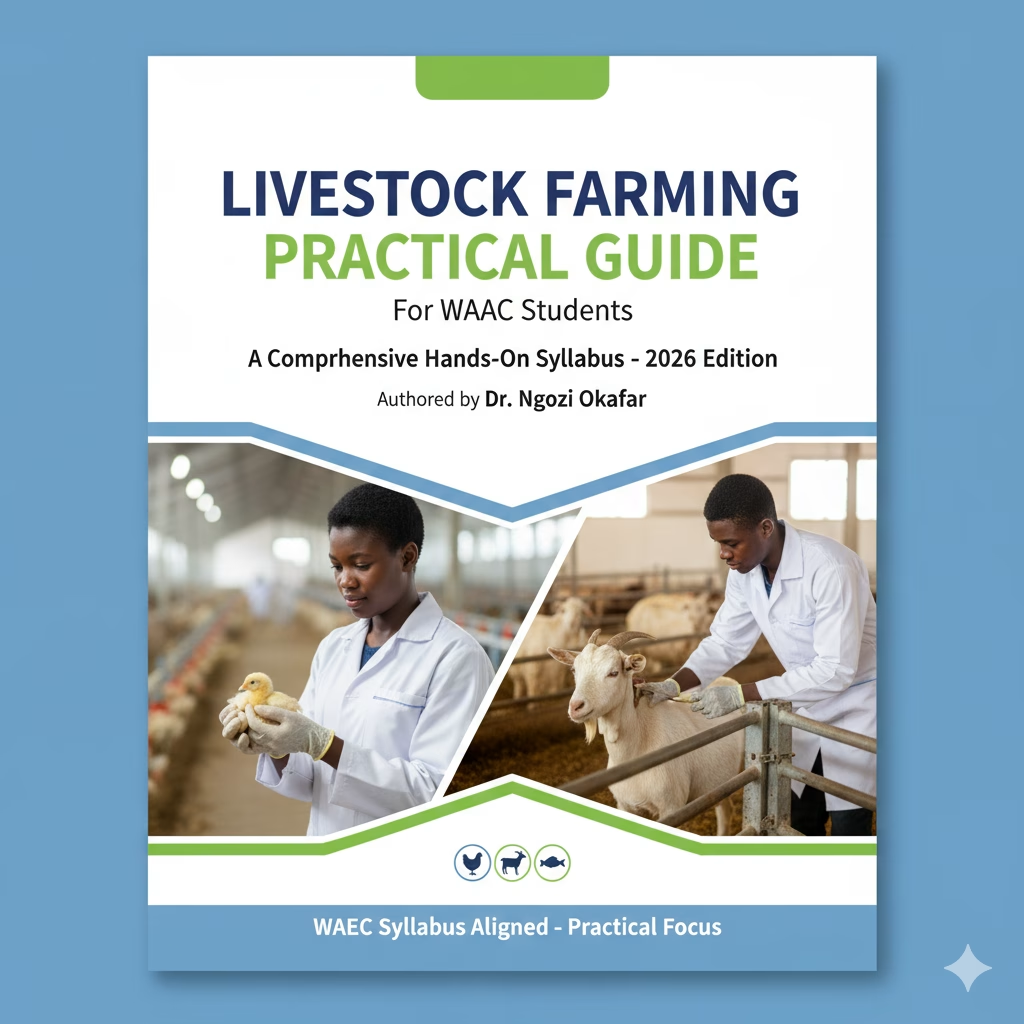
Livestock farming is the rearing of animals for food, income, raw materials, and other benefits. In WAEC Agricultural Science, livestock farming focuses on domesticated animals such as cattle, sheep, goats, pigs, poultry, rabbits, and fish.
Related: Best Computer Hardware and GSM Repair Textbook for SS1 Students (Complete Guide)
WAEC tests students on:
- Identification of farm animals
- Management practices
- Housing systems
- Feeding and nutrition
- Diseases and parasites
- Practical skills and farm tools
Understanding livestock farming practically helps students score higher in both theory and practical papers.
Importance of Livestock Farming to WAEC Students
Livestock farming is not only important for exams but also for real-life applications.
Key importance includes:
- Source of food such as meat, milk, eggs, and fish
- Source of income and employment
- Raw materials for industries (leather, wool, bones)
- Manure for crop production
- Development of practical agricultural skills
WAEC often asks questions based on these benefits, so students must understand them clearly.
Common Types of Livestock Studied in WAEC
WAEC Agricultural Science focuses on the following livestock:
1. Cattle Farming
Cattle are kept mainly for meat (beef), milk, and hides.
Important points for WAEC:
- Breeds of cattle
- Housing systems (open grazing, ranching)
- Feeding methods
- Common diseases (anthrax, tuberculosis)
2. Sheep and Goat Farming
Sheep and goats are popular because they are easy to manage.
Check out: WAEC Marking Scheme for Fashion Design Practical (Complete Student Guide)
WAEC focus areas:
- Differences between sheep and goats
- Housing and feeding
- Common diseases and parasites
- Economic importance
3. Pig Farming
Pigs grow fast and convert feed efficiently into meat.
Students should know:
- Housing systems for pigs
- Feeding practices
- Advantages of pig farming
- Common pig diseases
4. Poultry Farming (Very Important for WAEC)
Poultry is one of the most tested livestock topics in WAEC.
Types of poultry include:
- Chickens
- Turkeys
- Ducks
- Guinea fowls
WAEC frequently tests:
- Types of poultry birds
- Poultry housing systems
- Feeding stages (starter, grower, layer, finisher)
- Egg formation and production
- Poultry diseases and parasites
5. Rabbit and Grasscutter Farming
These are small livestock but are becoming popular.
Key points:
- Housing
- Feeding
- Reproduction
- Advantages of rearing small animals
Livestock Housing Systems (WAEC Practical Focus)
Housing is a major part of the WAEC practical exam.
Students should understand:
- Intensive system
- Semi-intensive system
- Extensive system
Features of Good Livestock Housing
- Good ventilation
- Protection from weather
- Easy cleaning
- Adequate space
- Security from predators
WAEC may ask students to draw and label livestock housing structures.
Check out: Difference Between WAEC CBT and Paper-Based Exams (2026 Guide)
Feeding and Nutrition of Livestock
Proper feeding is essential for growth, health, and productivity.
Types of Animal Feeds
- Concentrates
- Roughages
- Supplements
- Minerals and vitamins
Feeding Systems
- Free-range feeding
- Trough feeding
- Zero grazing
WAEC often tests:
- Balanced diet
- Feed ingredients
- Feeding methods for different animals
Livestock Reproduction (Exam-Relevant)
Reproduction topics are common in WAEC.
Students should know:
- Mating systems (natural and artificial)
- Gestation period of common animals
- Signs of heat in animals
- Care of young animals
Memorizing gestation periods is very important for exams.
Diseases and Parasites of Livestock
This is a high-scoring area in WAEC.
Common Livestock Diseases
- Newcastle disease
- Foot and mouth disease
- Anthrax
- Tuberculosis
Common Parasites
- Ticks
- Lice
- Fleas
- Worms
Students should know:
- Causes
- Symptoms
- Prevention and control methods
Livestock Farm Tools and Equipment (Practical Identification)
WAEC practical exams often include tool identification.
Common tools include:
- Syringe and needle
- Hoes and cutlasses
- Feeders and drinkers
- Thermometer
- Drenching equipment
Students may be asked to:
- Identify tools
- State their functions
- State maintenance practices
Practical Tips for WAEC Livestock Practical Exams
To succeed in WAEC practicals, students should:
Read now: How to Check 2026 WAEC Subject Combinations for Science Students (Step-by-Step Guide)
- Practice identifying animals, tools, and feeds
- Learn to draw and label diagrams clearly
- Memorize key definitions and functions
- Visit a farm if possible
- Study past WAEC questions
Clear handwriting and neat labeling can improve scores.
Common WAEC Livestock Questions Students Should Prepare For
Examples include:
- List five importance of livestock farming
- Identify the housing system shown
- State three causes and control of a named disease
- Mention tools used in poultry farming
- Explain feeding practices for a named animal
Practicing these questions improves confidence.
Benefits of Studying Livestock Farming Practically
Studying livestock farming practically helps students:
- Understand Agricultural Science better
- Score higher in WAEC
- Develop farming skills
- Prepare for agricultural careers
- Become self-reliant in the future
Final Thoughts: Livestock Farming Practical Guide for WAEC Students
Livestock farming is one of the most scoring and practical areas in WAEC Agricultural Science. With proper understanding, regular practice, and the right study guide, students can perform excellently in both theory and practical exams.
This Livestock Farming Practical Guide for WAEC students provides a solid foundation for exam success and real-life farming knowledge. Students are encouraged to study consistently, practice diagrams, and revise past questions regularly.
Success in WAEC Agricultural Science starts with understanding livestock farming practically.
Frequently Asked Questions (FAQs)
Is livestock farming compulsory in WAEC Agricultural Science?
Yes, it is a major component of the syllabus.
Do WAEC practical exams include real animals?
Sometimes pictures, specimens, or farm tools are used.
How can I score high in livestock practicals?
By practicing identification, drawing diagrams, and studying past questions.