WAEC Marking Scheme for Fashion Design Practical (Complete Student Guide)
Fashion Design is one of the most practical and skill-based subjects offered in the WAEC examination. Unlike theory papers where answers are written, the WAEC Fashion Design practical exam tests what you can actually do with your hands.
Many students fail not because they lack talent, but because they do not understand how WAEC marks the practical work.
This guide explains the WAEC marking scheme for Fashion Design practical in clear terms. If you are preparing for WAEC, teaching fashion design, or coaching candidates, this article will help you understand what examiners look for, how marks are awarded, and how to score high.
What Is the WAEC Fashion Design Practical Exam?
The WAEC Fashion Design practical is a hands-on examination where candidates are tested on their ability to:
-
Interpret fashion questions
-
Draft patterns or cut fabrics
-
Sew garments neatly and correctly
-
Apply finishing techniques
-
Demonstrate creativity and professionalism
The exam usually lasts several hours and requires candidates to produce a finished or near-finished garment based on instructions given by WAEC.
Why Understanding the WAEC Marking Scheme Matters
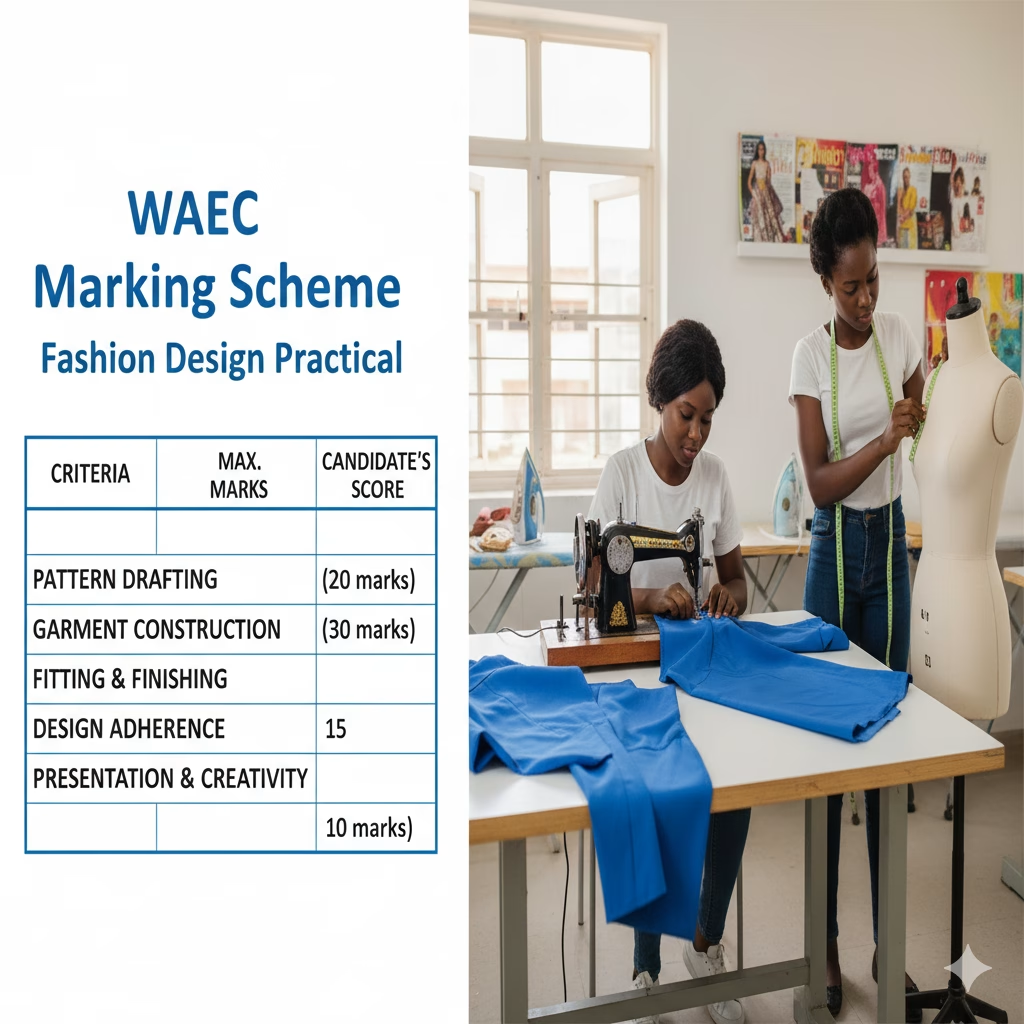
Many students assume that once a garment looks “fine,” it will earn high marks. That is not how WAEC works.
Read more: Current Marking Scheme for WAEC Practical Biology (2026 Guide)
WAEC uses a standardized marking scheme that breaks the total score into specific assessment areas. Each area carries marks, and examiners follow these criteria strictly.
Understanding the marking scheme helps you:
-
Avoid losing easy marks
-
Focus on what really matters
-
Manage time properly
-
Present work exactly as WAEC expects
Total Marks for WAEC Fashion Design Practical
Although WAEC does not always publish exact figures, the Fashion Design practical exam is generally marked over 100 marks, shared across several key areas.
These areas include:
-
Interpretation of the question
-
Pattern drafting or fabric cutting
-
Sewing and construction
-
Finishing
-
Fit and measurement
-
Creativity and originality
-
Neatness and presentation
-
Time management and work process
Let’s break them down one by one.
1. Interpretation of the Question (10–15 Marks)
This is the foundation of the entire practical.
WAEC examiners check whether you:
-
Understood the garment required
-
Followed instructions correctly
-
Chose the right style, fabric, and method
Common Mistakes Students Make
-
Sewing a different garment style
-
Ignoring specific instructions (e.g., “short sleeves” but sewing long sleeves)
-
Adding unnecessary designs not requested
Tip: Read the question at least three times before starting.
Check out: CBT Practice Questions for NECO 2026 Subjects: Ultimate Guide
2. Pattern Drafting or Fabric Cutting (15–20 Marks)
This section tests your technical accuracy.
Marks are awarded for:
-
Correct measurements
-
Proper drafting of patterns
-
Accurate cutting on fabric
-
Correct placement of patterns on fabric grain
What WAEC Examiners Look For
-
Straight and clean lines
-
Accurate seam allowances
-
Proper use of tools (ruler, chalk, tape)
Poor cutting cannot be corrected later, so mistakes here affect your entire score.
3. Sewing and Construction (25–30 Marks)
This is the highest-scoring section of the practical exam.
WAEC assesses:
-
Stitch quality
-
Correct joining of parts
-
Proper use of seams
-
Strength and durability of stitches
High-Scoring Sewing Features
-
Even stitches
-
No loose threads
-
Correct seam types used
-
Strong joining at stress points
Reality check: A beautiful design with poor stitching will score low.
4. Finishing Techniques (10–15 Marks)
Finishing separates average work from excellent work.
WAEC marks candidates on:
-
Neat hemming
-
Proper neckline finishing
-
Clean armholes
-
Proper fastening (buttons, zippers, hooks)
Finishing Errors That Cost Marks
-
Raw or frayed edges
-
Crooked zippers
-
Untidy hems
-
Visible loose threads
Always leave time to finish neatly.
See now: NABTEB Revamped 28 Trade Subjects List 2026 (Full Updated Guide)
5. Fit and Measurement Accuracy (10 Marks)
The garment must fit the intended size or dummy.
Examiners check:
-
Correct length
-
Balanced garment shape
-
Proper alignment
-
Comfort and wearability
Even if everything else is perfect, poor fit reduces your score.
6. Creativity and Originality (5–10 Marks)
WAEC encourages creativity, but within limits.
Marks are awarded for:
-
Neat decorative elements
-
Simple but creative design ideas
-
Appropriate fabric choice
Warning: Creativity should not override instructions. Over-designing can cost marks.
7. Neatness and Presentation (5–10 Marks)
This is where many students lose easy marks.
WAEC looks at:
-
Clean work surface
-
Well-pressed garment
-
Proper folding or hanging
-
Overall professional appearance
A neatly presented garment can impress the examiner before they even inspect it closely.
8. Time Management and Work Process (5 Marks)
Although not always obvious, WAEC examiners observe:
-
How organized you are
-
Whether you complete key stages
-
If the garment reaches a reasonable stage of completion
Incomplete work attracts serious mark deductions, even if what is done is neat.
Common Reasons Students Fail Fashion Design Practical
Understanding these mistakes can save your grade:
-
Rushing cutting without measurement
-
Ignoring finishing
-
Poor time planning
-
Untidy sewing
-
Misinterpreting the question
-
Over-decoration
-
Poor garment fitting
How to Score High in WAEC Fashion Design Practical
Here are proven tips:
Read also: Cultural and Creative Arts Project Ideas for Primary School Pupils (Easy & Fun)
-
Practice past WAEC practical questions
-
Master basic stitches and seams
-
Learn neat finishing techniques
-
Practice time-bound sewing
-
Keep tools clean and organized
-
Follow instructions strictly
-
Focus on neatness over complexity
Remember: Simple, neat work scores higher than complex but messy work.
Teacher and Student Preparation Tips
For Students
-
Practice at least twice weekly
-
Simulate exam conditions
-
Focus on accuracy, not speed
For Teachers
-
Teach marking criteria clearly
-
Conduct mock practical exams
-
Emphasize finishing and fit
Frequently Asked Questions (FAQs)
Does WAEC mark Fashion Design practical strictly?
Yes. WAEC uses a standardized marking scheme, and examiners follow it closely.
Is creativity compulsory in WAEC Fashion Design practical?
Creativity earns marks, but it must align with the exam instructions.
Can I still score well if my garment is not fully completed?
Partial completion attracts deductions, but neat and correct work can still earn reasonable marks.
Which area carries the highest marks?
Sewing and construction usually carry the highest number of marks.
Does WAEC penalize untidy work?
Yes. Neatness and presentation directly affect your final score.
Final Thoughts
The WAEC marking scheme for Fashion Design practical is not a mystery once you understand it. WAEC does not reward guesswork or rushed creativity. Instead, it rewards accuracy, neatness, correct technique, and proper interpretation of instructions.
If you prepare with the marking scheme in mind, your practical exam becomes less stressful and far more rewarding.
Master the basics. Finish neatly. Follow instructions. That’s how you score high.