How to Teach Soil Enrichment to Primary 4 Students: A Simple and Effective Classroom Guide
Teaching soil enrichment to Primary 4 students is an important part of basic agricultural and environmental education.
At this level, pupils are naturally curious about plants, farming, and nature. Soil enrichment lessons help them understand how healthy soil supports plant growth and why caring for the soil is essential for food production and environmental sustainability.
This comprehensive guide is written for primary school teachers, parents, and tutors. It explains how to teach soil enrichment to Primary 4 students using simple language, practical activities, and age-appropriate methods that align with the primary school curriculum.
What Is Soil Enrichment?
Soil enrichment is the process of improving the quality and fertility of the soil so that plants can grow well. It involves adding natural or artificial materials to the soil to make it richer in nutrients.
For Primary 4 students, soil enrichment should be explained in very simple terms. Teachers can describe it as “helping the soil to become healthy so plants can grow strong.”
Key points pupils should understand include:
Soil helps plants grow
Good soil has nutrients
Plants grow better in enriched soil
Farmers improve soil to get better crops
Importance of Teaching Soil Enrichment at Primary 4 Level
Teaching soil enrichment at this stage helps pupils build early knowledge of agriculture and environmental care.
The benefits include:
Helping pupils understand where food comes from
Encouraging respect for farming and farmers
Teaching responsibility and care for the environment
Building practical skills through hands-on activities
Supporting science and agricultural studies
These lessons also promote sustainability and environmental awareness from a young age.
See more: SOLAR PV INSTALLATION NABTEB PAST QUESTIONS 2026: COMPLETE EXAM GUIDE FOR STUDENTS
Learning Objectives for Teaching Soil Enrichment
Before teaching soil enrichment, it is important to set clear learning objectives. By the end of the lesson, Primary 4 students should be able to:
Explain what soil enrichment means
Mention reasons why soil enrichment is important
Identify materials used for soil enrichment
Participate in simple soil enrichment activities
Observe differences between enriched and unenriched soil
Clear objectives help guide lesson planning and assessment.
Key Topics to Cover When Teaching Soil Enrichment
Meaning of Soil Enrichment
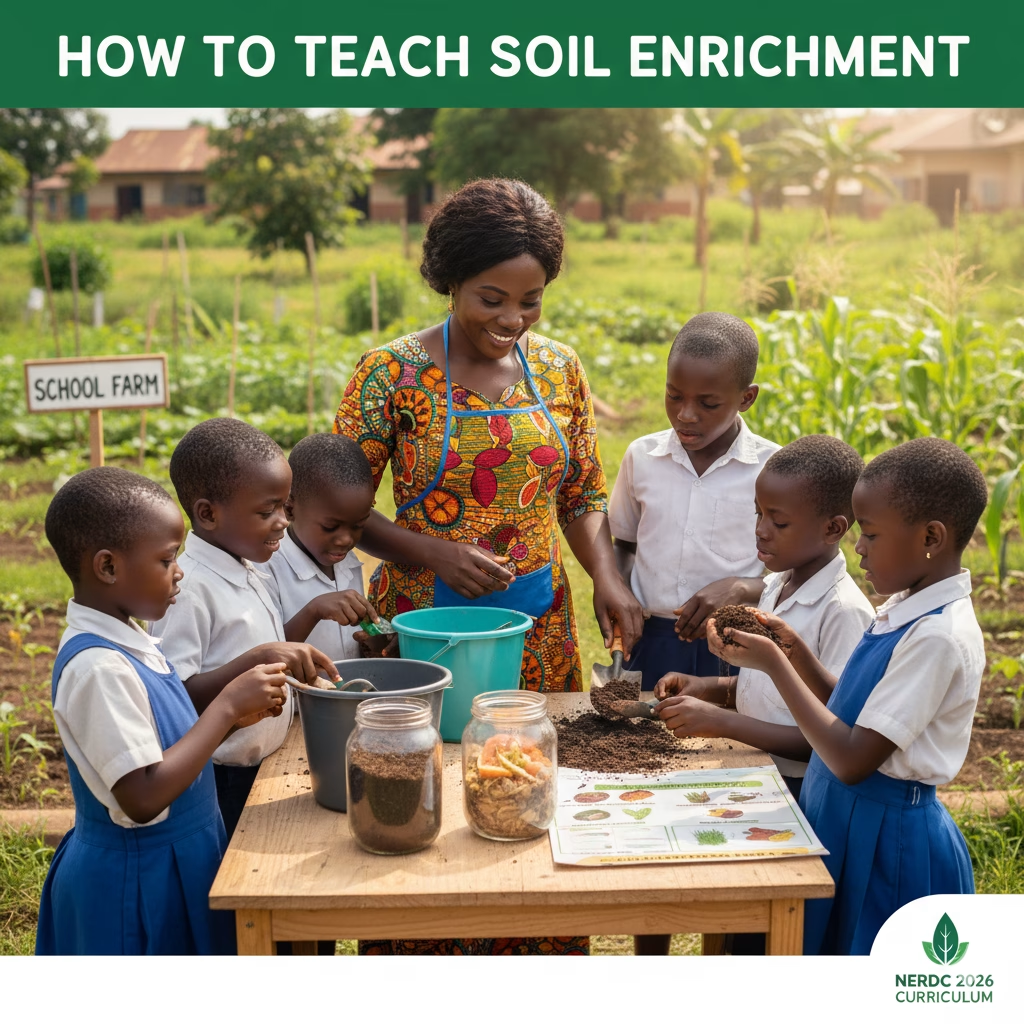
Start by explaining the meaning of soil enrichment in simple terms. Use everyday examples that pupils can relate to.
You can say:
“Soil enrichment means adding good things to the soil to help plants grow better.”
Use pictures, charts, or real soil samples to make the explanation clearer.
Why Soil Enrichment Is Important
Explain why farmers and gardeners enrich the soil.
Key reasons include:
Soil loses nutrients after planting crops
Enriched soil helps plants grow faster
Healthy soil produces better crops
Soil enrichment improves food production
Relating soil enrichment to food pupils eat at home makes the lesson more meaningful.
Materials Used for Soil Enrichment
Primary 4 pupils should be introduced to simple and common soil enrichment materials.
Examples include:
Animal manure
Compost
Plant remains
Fertilizer (basic explanation only)
Teachers should emphasize that some materials are natural while others are made by humans.
See also: Beauty and Cosmetology Secondary School Curriculum: Complete Guide for Students
Methods of Soil Enrichment Suitable for Primary 4
At this level, teaching should focus on basic and safe methods.
Examples include:
Adding compost to soil
Using animal manure
Mixing dry leaves with soil
Avoid complex scientific explanations. Focus on observation and simple understanding.
Teaching Methods for Soil Enrichment in Primary 4
Effective teaching of soil enrichment requires interactive and practical methods.
Use Simple Language
Always use words that pupils can easily understand. Avoid technical terms or explain them clearly if they must be used.
Use Visual Aids
Charts, pictures, videos, and real objects make learning more interesting. Showing pupils compost or manure helps them understand better than just talking.
Demonstration Method
Demonstrate how to enrich soil using a small container or school garden.
Steps include:
Show plain soil
Add compost or manure
Mix properly
Explain what has been done
This method helps pupils learn by seeing and doing.
Practical Activities and Experiments
Simple practical activities make lessons memorable.
Example activity:
Divide pupils into groups
Give each group soil in two containers
Add compost to one container only
Plant seeds in both containers
Observe plant growth over time
This helps pupils see the effect of soil enrichment.
Storytelling and Discussion
Tell short stories about farmers or gardeners who improve their soil. Encourage pupils to ask questions and share experiences.
Check out: Computer Hardware and GSM Repairs Practical Guide for Secondary School Students
Lesson Plan Outline for Teaching Soil Enrichment
A simple lesson plan structure may include:
Introduction: Ask pupils what plants need to grow
Explanation: Define soil enrichment
Discussion: Talk about why it is important
Demonstration: Show how to enrich soil
Activity: Let pupils participate
Conclusion: Revise key points
This structure keeps the lesson organized and engaging.
Classroom and Outdoor Activities
Soil enrichment lessons are more effective when pupils go outside.
Outdoor activities may include:
Visiting the school garden
Collecting dry leaves
Making simple compost
Watering enriched soil
Outdoor learning encourages curiosity and hands-on experience.
Assessment Methods for Primary 4 Students
Assessment should be simple and appropriate for the age group.
Examples include:
Oral questions
Short written exercises
Practical demonstrations
Group presentations
Sample assessment questions:
What is soil enrichment?
Mention two materials used to enrich soil.
Why do farmers enrich soil?
These questions help teachers evaluate understanding.
Common Challenges and How to Overcome Them
Some challenges teachers may face include:
Lack of materials
Limited space for gardening
Time constraints
Solutions include:
Using small containers instead of garden beds
Collecting materials locally
Integrating lessons with other subjects
Creativity helps overcome these challenges.
Read more: New Vocational Subjects for Junior Secondary Schools (JSS) 2026: Complete Guide
Tips for Parents Supporting Soil Enrichment Learning at Home
Parents can support learning by:
Allowing children to help with home gardening
Explaining how plants grow
Encouraging observation of soil and plants
Providing simple materials like leaves and kitchen waste
Home support reinforces classroom learning.
Importance of Soil Enrichment in Everyday Life
Teaching soil enrichment helps pupils understand real-life applications.
It shows them that:
Healthy soil produces food
Good farming practices protect the environment
Humans must care for nature
These lessons build responsible future citizens.
Conclusion
Teaching soil enrichment to Primary 4 students is both educational and enjoyable when done correctly. By using simple language, practical demonstrations, and engaging activities, teachers can help pupils understand how soil supports plant growth and why soil enrichment is important.
This topic not only supports agricultural studies but also teaches environmental responsibility, teamwork, and observation skills.
With the right teaching methods and support from parents, Primary 4 students can develop a strong foundation in soil enrichment that will benefit their learning and everyday life for years to come.