NABTEB Revamped 28 Trade Subjects List 2026 (Full Updated Guide)
The National Business and Technical Examinations Board (NABTEB) has taken a major step forward by revamping its trade subjects for 2026, aligning technical education in Nigeria with modern industry demands, entrepreneurship, and global skills standards.
With 28 approved trade subjects, NABTEB now offers students practical, hands-on skills that lead directly to employment, self-reliance, apprenticeships, and further education.
In this guide, you’ll find the official NABTEB revamped 28 trade subjects list for 2026, what each trade covers, and why choosing NABTEB may be one of the smartest academic decisions today.
Why NABTEB Revamped Its Trade Subjects
Nigeria’s education system is shifting from certificate-only learning to skill-based education. NABTEB’s new trade structure focuses on:
-
Employable and entrepreneurial skills
-
Digital and renewable energy technologies
-
Industrial and construction trades
-
ICT, automation, and modern manufacturing
-
Global best practices in technical education
This change supports the TVET (Technical and Vocational Education and Training) framework recommended by UNESCO and adopted by Nigeria.
Check out: Pre-Vocational Studies Primary 4 Second Term Scheme: Complete Guide for Teachers and Parents
NABTEB Revamped 28 Trade Subjects List 2026
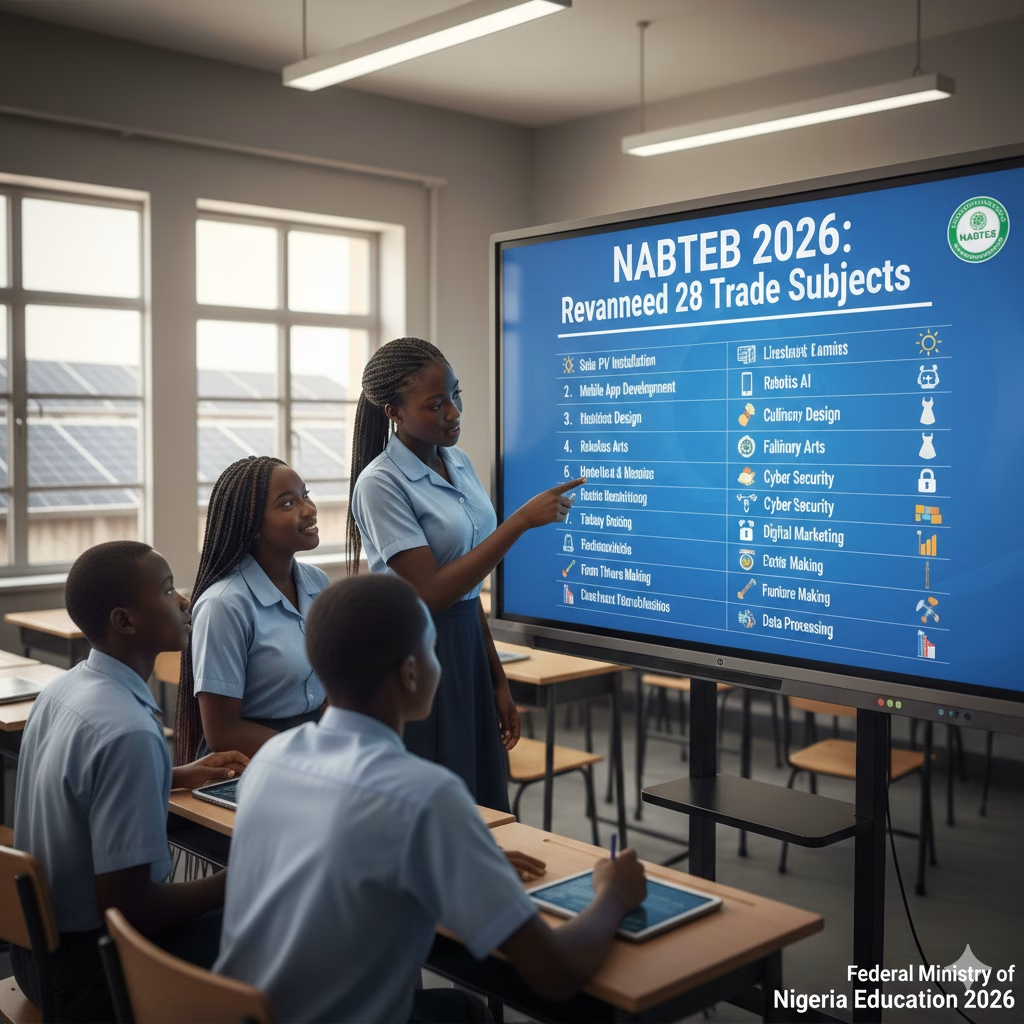
Below is the updated and approved list of NABTEB trade subjects for 2026, grouped for easy understanding.
A. Electrical, Electronics & Renewable Energy Trades
-
Electrical Installation and Maintenance
-
Electronics Works
-
Solar Photovoltaic (PV) Installation and Maintenance
-
Instrumentation and Control Engineering Trade
Career paths: Electrician, solar technician, automation assistant, power systems technician.
B. Mechanical, Automotive & Metal Trades
-
Motor Vehicle Mechanics Works
-
Auto Electrical Works
-
Refrigeration and Air Conditioning Works
-
Welding and Fabrication Engineering Craft Practice
-
Mechanical Engineering Craft Practice
Career paths: Auto mechanic, AC technician, welder, plant maintenance assistant.
C. Construction & Building Trades
-
Bricklaying, Blocklaying and Concreting
-
Carpentry and Joinery
-
Plumbing and Pipe-Fitting
-
Painting and Decorating
Career paths: Building technician, site supervisor assistant, construction entrepreneur.
D. ICT, Media & Digital Technology Trades
-
Computer Craft Studies
-
Data Processing
-
Information and Communication Technology (ICT)
-
Printing Craft Practice
Career paths: Computer operator, IT support technician, digital production assistant.
See also: Current Marking Scheme for WAEC Practical Biology (2026 Guide)
E. Fashion, Beauty & Creative Trades
-
Garment Making (Fashion Design)
-
Cosmetology (Beauty Therapy)
-
Textiles
Career paths: Fashion designer, tailor, beauty therapist, textile entrepreneur.
F. Hospitality, Catering & Home Management Trades
-
Catering Craft Practice
-
Hotel and Catering Services
Career paths: Chef, caterer, hospitality assistant, food business owner.
G. Agriculture, Wood & Environmental Trades
-
Agricultural Mechanics
-
Animal Husbandry
-
Fisheries
-
Forestry
-
Upholstery
Career paths: Agribusiness technician, livestock assistant, furniture maker.
H. Specialized Technical Trade
-
Foundry Craft Practice
Career paths: Metal casting technician, industrial production assistant.
What Makes NABTEB Trade Subjects Different from WAEC
| Feature | NABTEB | WAEC |
|---|---|---|
| Focus | Practical & technical skills | Academic subjects |
| Assessment | Hands-on + theory | Mostly theory |
| Employability | High | Moderate |
| Entrepreneurship | Strong emphasis | Limited |
| Acceptance | Universities, Polytechnics, Skills Programs | Universities & Colleges |
NABTEB certificates are accepted by universities, polytechnics, colleges of education, and technical institutes in Nigeria.
Who Should Choose NABTEB Trade Subjects in 2026
NABTEB is ideal for:
Check out: Smart Science: Less Competitive Courses in Nigeria with High Job Prospects (2026)
-
Students interested in technical and vocational careers
-
Learners who prefer practical work over theory
-
Students planning to attend polytechnics or technical colleges
-
Aspiring entrepreneurs and artisans
-
Candidates interested in skills-based migration opportunities
Admission and Subject Combination Tips
-
Students typically combine trade subjects with core subjects like English Language and Mathematics
-
Schools may offer 2–3 trade subjects per candidate
-
Always confirm availability with your technical school or NABTEB center
Career Opportunities After NABTEB Trade Subjects
Graduates can:
-
Work immediately as skilled technicians
-
Start small businesses or workshops
-
Enroll in polytechnics or technical colleges
-
Participate in government skills programs (N-Power, ITF, NSQF)
-
Gain certifications for international trade opportunities
Conclusion
The NABTEB revamped 28 trade subjects list for 2026 represents a powerful shift toward skills, self-reliance, and employability. With growing demand for technicians, artisans, and digital professionals, NABTEB graduates are now better positioned than ever for success in Nigeria and beyond.
If you want an education that works in the real world, NABTEB trade subjects are a smart choice.
Frequently Asked Questions (FAQs)
Is NABTEB accepted by universities in Nigeria?
Yes. Many universities and polytechnics accept NABTEB for admission.
How many trade subjects can a student offer?
Usually 1–3, depending on school facilities.
Is NABTEB better than WAEC?
Neither is better, NABTEB is more practical, WAEC is more academic.
Can NABTEB students write JAMB?
Yes, as long as they meet the subject requirements.


