Pre-Vocational Studies Primary 4 Second Term Scheme: Complete Guide for Teachers and Parents
Pre-Vocational Studies is an essential subject in the Nigerian primary school curriculum. It introduces pupils to basic life skills, practical activities, and simple trades that help them develop creativity, problem-solving skills, and appreciation for work.
For Primary 4 pupils, the second term often focuses on expanding their knowledge of tools, vocational activities, safety rules, and practical applications. This blog post provides a detailed Primary 4 Pre-Vocational Studies Second Term Scheme of Work to guide teachers, parents, and curriculum planners.
Why a Pre-Vocational Studies Scheme Matters
A scheme of work is more than a list of topics, it’s a roadmap that helps teachers deliver lessons effectively. It ensures that:
-
Pupils build practical skills progressively
-
Lessons meet the objectives of the Nigerian curriculum
-
Teachers can plan activities and assessment methods in advance
-
Parents can support learning at home
With this scheme, pupils can gradually understand vocational skills, tools, and safety measures, laying a foundation for future learning.
Read more: Current Marking Scheme for WAEC Practical Biology (2026 Guide)
Pre-Vocational Studies Primary 4 Second Term Scheme of Work
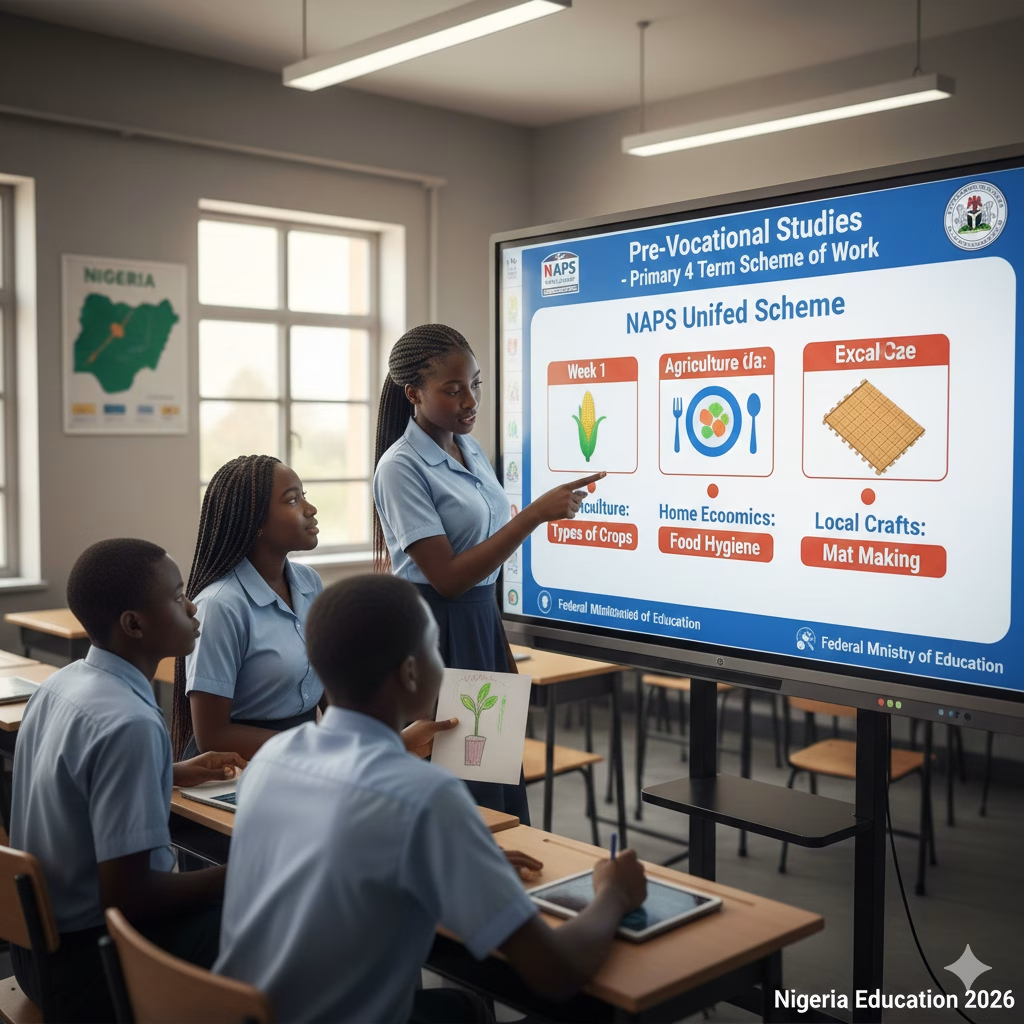
Here’s a week-by-week breakdown of the second-term scheme of work for Primary 4:
| Week | Topic | Sub-Topics / Content | Learning Objectives |
|---|---|---|---|
| 1 | Revision of Previous Term | Review first term topics | Pupils recall previous knowledge and skills |
| 2 | Meaning of Pre-Vocational Studies | Definition, importance, scope | Pupils explain what pre-vocational studies are and why they matter |
| 3 | Types of Pre-Vocational Activities | Farming, crafts, trading, building | Pupils identify examples of vocational activities |
| 4 | Introduction to Tools | Definition, types of tools | Pupils define tools and list examples used in everyday life |
| 5 | Types of Simple Tools | Farming tools, home tools, craft tools | Pupils identify different tools and their purposes |
| 6 | Uses of Simple Tools | How tools are used safely | Pupils demonstrate correct usage of basic tools |
| 7 | Safety Rules When Using Tools | Dos and Don’ts, first aid basics | Pupils learn safety rules to prevent accidents |
| 8 | Practical Activity: Tool Handling | Demonstration and guided practice | Pupils practice handling simple tools under supervision |
| 9 | Simple Craft Work | Paper folding, bead making, basic sewing | Pupils complete a small craft project |
| 10 | Simple Farming Activities | Planting seeds, watering plants, basic soil care | Pupils understand basic farming techniques |
| 11 | Application of Pre-Vocational Skills | Combining tools, craft, and farming | Pupils integrate skills learned into a small project |
| 12 | Revision and Assessment | Recap, practical test, evaluation | Pupils demonstrate knowledge and skills learned during the term |
Pre-Vocational Studies Primary 4 Second Term Scheme: Agricultural Science & Home Economics
Term Focus: Weeks 1–12
Subjects Covered: Agricultural Science (Weeks 1–6), Home Economics (Weeks 7–12)
Target Pupils: Primary 4
Part 1: Agricultural Science (Weeks 1–6)
Focus: Understanding soil, farm tools, and the foundation of farming
Agricultural Science introduces pupils to the basics of farming, the environment, and tools. The first term focuses on understanding soil, identifying farm tools, and learning their proper usage. These skills provide the foundation for practical farming and a respect for nature.
Week 1: Introduction to Soil
-
Definition of Soil: Pupils learn that soil is the top layer of the earth where plants grow.
-
Identification of Soil Types: Introduce sandy, clayey, and loamy soils. Discuss where each type is commonly found in the local environment.
-
Activity Idea: Collect small soil samples from the school compound or home garden for observation.
Week 2: Characteristics and Properties of Soil
-
Pupils explore soil texture (smooth, gritty, sticky) and color (brown, red, black).
-
Water-Holding Capacity Experiment: Test how different soils absorb and retain water using simple containers.
-
Encourage observation and recording in notebooks to develop early scientific skills.
Check out: JAMB Direct Entry Requirements for Working Professionals 2026
Week 3: Soil Fertility and Management
-
What Makes Soil Fertile? Teach the importance of nutrients like nitrogen, phosphorus, and potassium.
-
Causes of Soil Infertility: Over-grazing, erosion, leaching.
-
How to Improve Soil Fertility: Use of organic materials (compost, manure) and inorganic fertilizers.
-
Activity Idea: Demonstrate planting in fertile vs infertile soil to show growth differences.
Week 4: Farm Tools – Cutting and Digging Tools
-
Tools Introduced: Cutlass, Hoe, Pick-axe, Spade
-
Uses: Show how each tool is used for clearing land, planting, and digging.
-
Safety Tip: Never swing tools near others and always store safely after use.
-
Activity Idea: Supervised hands-on demonstration with toy or child-safe versions.
Week 5: Farm Tools – Carrying and Gathering Tools
-
Tools Introduced: Wheelbarrow, Head-pan, Rake, Basket
-
Uses: Transporting soil, gathering crops, and organizing farm materials.
-
Emphasize safe handling, especially for sharp or heavy tools.
-
Activity Idea: Mini relay games to demonstrate transporting soil or harvested crops.
Week 6: Maintenance of Farm Tools
-
Pupils learn to clean, oil, sharpen, and store tools properly.
-
Explain the consequences of rusting and neglect.
-
Encourage pupils to take pride in taking care of tools, fostering responsibility.
Part 2: Home Economics (Weeks 7–12)
Focus: Personal hygiene, clothing, and basic sewing skills
Home Economics helps pupils understand daily living skills, hygiene, and clothing care, forming habits that contribute to health and personal development.
See more: Universities That Accept 150 JAMB Score in 2026: A Complete Guide for Students
Week 7: The Human Body – Parts and Functions
-
Identify external body parts: Head, Trunk, Limbs
-
Discuss the functions of the skin, nails, and hair in protection, sensation, and hygiene
-
Activity: Draw and label a simple body diagram in notebooks
Week 8: Personal Hygiene and Body Care
-
Teach daily hygiene habits: bathing, brushing teeth, hair care
-
Discuss the tools used: Soap, sponges, towels
-
Explain why hygiene is essential for health and social interaction
Week 9: Cosmetics and Skin Care
-
Define cosmetics: traditional vs modern
-
Discuss the dangers of harmful chemicals, bleaching creams, or expired products
-
Activity: Pupils list natural ways to care for skin safely
Week 10: Introduction to Clothing and Textiles
-
Why We Wear Clothes: Protection, modesty, personal expression
-
Types of Clothing: School uniforms, sportswear, traditional attire
-
Discuss how clothing can reflect culture and occasion
Week 11: Sewing Tools and Basic Stitches
-
Tools Introduced: Needle, Thread, Thimble, Scissors
-
Practical Skills: Temporary stitches like even and uneven basting/tacking
-
Activity: Create small fabric samples, e.g., simple patchwork or cloth pieces
Week 12: Revision and End of Term Examination
-
Review all topics covered in Agricultural Science and Home Economics
-
Conduct practical demonstrations: soil testing, tool handling, basic stitching
-
Summative assessment ensures pupils can apply knowledge and practical skills
Part 3: Key Resources for Teachers
-
Practical Activities:
-
Set up a small school garden for soil and plant experiments
-
Create a sewing corner for stitch practice
-
-
Continuous Assessment (C.A):
-
Weekly quizzes on soil types, farm tools, and hygiene habits
-
Observation of practical activities for skill mastery
-
-
Instructional Materials:
-
Soil samples, garden tools, worksheets, charts, sewing kits
-
Benefits of This Scheme
Read now: How to Use AI to Solve WAEC Past Questions: The 2026 Student Guide
-
Builds practical, hands-on skills in agriculture and home economics
-
Encourages responsibility and care for tools and personal hygiene
-
Promotes healthy living habits from an early age
-
Prepares pupils for secondary school vocational subjects
Key Learning Objectives for Primary 4 Pupils
By the end of the second term, pupils should be able to:
-
Understand the concept and importance of pre-vocational studies
-
Identify and use simple tools safely
-
Recognize different vocational activities like farming, crafts, and trading
-
Apply basic practical skills in everyday life
-
Follow safety rules while handling tools
-
Demonstrate creativity through simple craft projects
Tips for Teachers Using This Scheme
-
Incorporate Practical Demonstrations – Use real tools and materials whenever possible.
-
Encourage Participation – Make lessons interactive; let pupils handle materials and tools.
-
Reinforce Safety – Always teach safety rules before starting a practical activity.
-
Integrate Assessments – Include both oral and practical tests to evaluate skill development.
-
Use Local Resources – Adapt the scheme to include materials and tools available locally.
Benefits of Pre-Vocational Studies for Primary 4 Pupils
-
Develops hands-on skills that prepare pupils for secondary school vocational subjects
-
Encourages problem-solving and creativity
-
Builds confidence and independence
-
Prepares pupils for entrepreneurship and practical life
-
Complements academic subjects with real-world applications
Conclusion
The Primary 4 Pre-Vocational Studies Second Term Scheme of Work is designed to guide teachers and parents in delivering practical, engaging, and skill-oriented lessons. By following this scheme, pupils will gain useful skills, confidence, and creativity while learning the value of work and responsibility.
Whether your focus is craft, farming, tool handling, or basic entrepreneurship, this scheme ensures a structured approach that prepares pupils for future success.