Catering Craft Practice vs Garment Making for Humanities Students: Which Trade Subject Is Better?
Choosing the right trade subject in Senior Secondary School is a major decision, especially for Humanities (Arts) students who want practical skills alongside academic subjects like Literature, Government, History, and CRS/IRS.
Two of the most popular trade subjects for humanities students are Catering Craft Practice and Garment Making (Fashion Design).
Both subjects are WAEC- and NECO-approved, skill-oriented, and capable of leading to self-employment, entrepreneurship, or further education. However, they differ in skill focus, learning style, career outcomes, and personal suitability.
This in-depth guide compares Catering Craft Practice vs Garment Making for Humanities students, helping students, parents, and guidance counselors make an informed choice.
Understanding Trade Subjects for Humanities Students
Trade subjects are not limited to science or technical students. Humanities students often excel in trade subjects that require:
-
Creativity
-
Communication skills
-
Organization and planning
-
Cultural awareness
-
Entrepreneurial thinking
Both Catering Craft Practice and Garment Making align well with these strengths.
Read now: How to Use AI to Solve WAEC Past Questions: The 2026 Student Guide
What Is Catering Craft Practice?
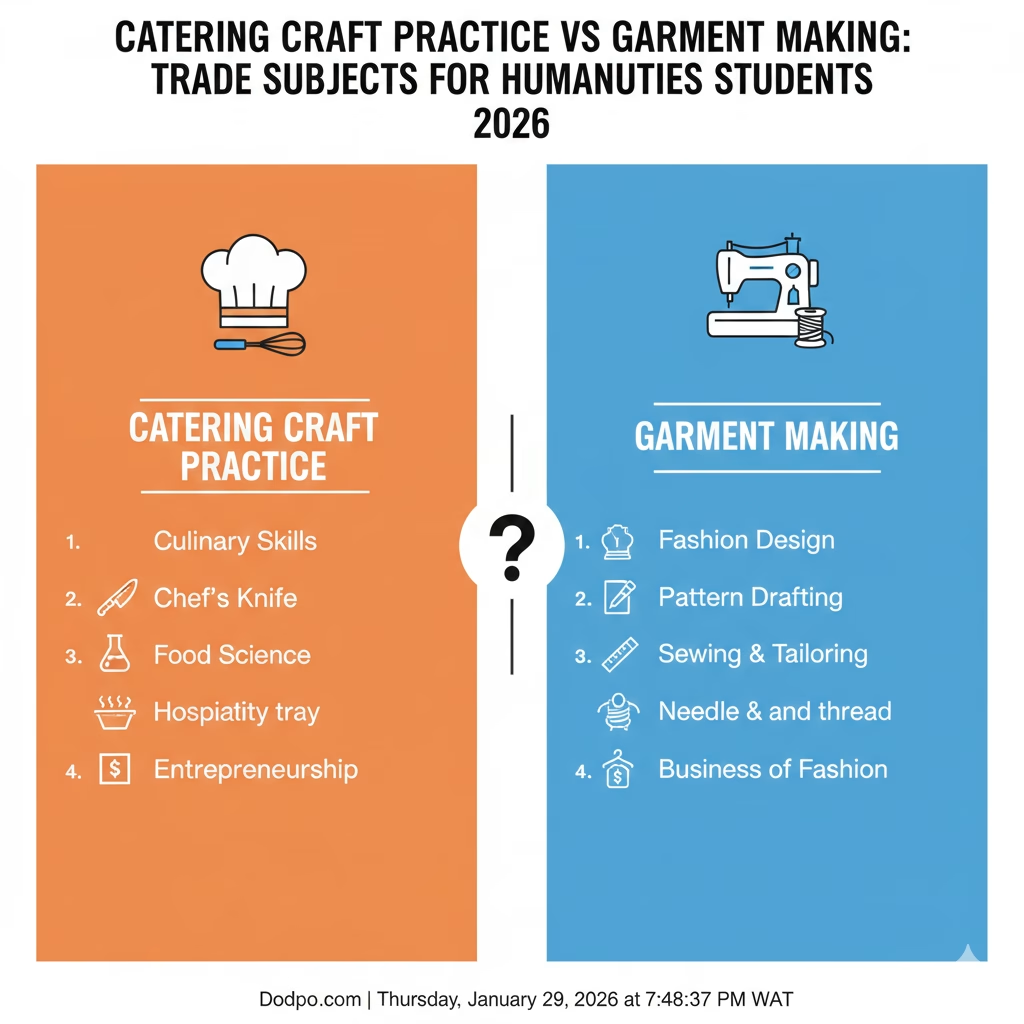
Catering Craft Practice is a vocational subject that focuses on food preparation, service, nutrition, hygiene, and hospitality management.
It prepares students for careers in:
-
Catering
-
Hospitality
-
Food services
-
Event management
Key Areas Covered in Catering Craft Practice
-
Food preparation and cooking methods
-
Meal planning and menu design
-
Nutrition and balanced diet
-
Kitchen safety and hygiene
-
Food service and table setting
-
Catering equipment and tools
-
Entrepreneurship in catering
What Is Garment Making?
Garment Making, also known as Fashion Design or Clothing and Textiles (practical aspect), focuses on designing, cutting, sewing, and finishing clothes.
It prepares students for careers in:
-
Fashion design
-
Tailoring
-
Clothing production
-
Textile entrepreneurship
Key Areas Covered in Garment Making
-
Sewing tools and equipment
-
Fabric types and uses
-
Body measurements
-
Pattern drafting
-
Cutting and stitching
-
Garment finishing
-
Fashion business basics
Why Humanities Students Commonly Choose These Subjects
Humanities students often prefer subjects that:
-
Are less mathematically intensive
-
Allow creativity and expression
-
Support entrepreneurship
-
Combine theory with practice
Both Catering Craft Practice and Garment Making meet these criteria, making them popular choices.
Check out: How to Make Compost Manure: A Simple Project Guide for Primary School
Catering Craft Practice vs Garment Making: Detailed Comparison
1. Nature of Skills Learned
Catering Craft Practice
-
Cooking and baking skills
-
Food presentation and creativity
-
Time management under pressure
-
Teamwork and coordination
-
Customer service skills
Garment Making
-
Creative design skills
-
Precision and attention to detail
-
Hand and machine sewing
-
Measurement and fitting skills
-
Patience and consistency
Best Fit:
-
Choose Catering if you enjoy cooking, hosting, and fast-paced environments
-
Choose Garment Making if you enjoy creativity, design, and working with your hands
2. Learning Style and Practical Demands
Catering Craft Practice
-
Requires frequent practical cooking sessions
-
Involves standing for long hours
-
Uses consumable materials (ingredients)
-
Often done in groups
Garment Making
-
Requires extended sitting and focus
-
Uses sewing machines and tools
-
Less frequent replacement of materials
-
Often done individually
Humanities students who prefer collaborative work may enjoy catering, while those who prefer independent creative work may enjoy garment making.
3. Examination Structure (WAEC / NECO)
Both subjects are examined through theory and practical papers.
Catering Craft Practice Exam
-
Theory: nutrition, hygiene, food safety, catering management
-
Practical: cooking meals, baking, food presentation, table setting
Garment Making Exam
-
Theory: fabrics, tools, pattern drafting, fashion concepts
-
Practical: sewing garments, cutting, finishing, tool identification
Neither subject requires advanced mathematics, making them suitable for humanities students.
4. Career Opportunities After Secondary School
Careers in Catering Craft Practice
-
Caterer
-
Baker
-
Pastry chef
-
Restaurant worker
-
Hotel staff
-
Event caterer
-
Food business owner
Careers in Garment Making
-
Fashion designer
-
Tailor
-
Clothing manufacturer
-
Fashion entrepreneur
-
Costume designer
-
Fashion illustrator
-
Boutique owner
Both subjects offer strong self-employment opportunities, which is attractive to humanities students seeking independence.
5. Income and Business Potential
Catering Craft Practice
-
Faster income generation
-
High demand for food services
-
Daily cash flow potential
-
Seasonal demand (events, holidays)
Garment Making
-
Slower startup but long-term growth
-
High profit on custom designs
-
Branding opportunities
-
International fashion market access
Catering may bring quicker returns, while garment making may offer long-term brand growth.
Check out: COMPULSORY TRADE SUBJECTS FOR SENIOR SECONDARY SCHOOL 2026: FULL GUIDE FOR NIGERIAN STUDENTS
6. Tools, Equipment, and Startup Cost
Catering Craft Practice
-
Cooking utensils
-
Oven, gas cooker
-
Ingredients (recurring cost)
-
Storage facilities
Garment Making
-
Sewing machine
-
Fabrics and threads
-
Measuring tools
-
Cutting table
Garment making often has lower recurring costs, while catering requires continuous purchase of ingredients.
7. Suitability Based on Personality
Catering Craft Practice Is Ideal If You:
-
Enjoy cooking and food creativity
-
Work well under pressure
-
Like teamwork
-
Enjoy serving people
Garment Making Is Ideal If You:
-
Love fashion and design
-
Are patient and detail-oriented
-
Enjoy quiet, focused work
-
Like creating unique items
Humanities students should choose based on personality, not popularity.
Catering Craft Practice vs Garment Making for JAMB and Further Education
While both are trade subjects, they support different post-secondary paths.
-
Catering supports courses like Hospitality Management, Home Economics, Nutrition, and Food Science-related fields
-
Garment Making supports Fashion Design, Clothing and Textiles, Industrial Design, and creative arts programs
Humanities students planning polytechnic or vocational education should consider this alignment.
Common Myths About These Trade Subjects
Myth 1: Trade subjects are for weak students
Fact: Trade subjects require intelligence, creativity, and discipline.
Myth 2: Humanities students cannot succeed in trade subjects
Fact: Humanities students often excel due to creativity and communication skills.
Myth 3: Catering is only for girls
Fact: Catering is a professional career for all genders.
Myth 4: Garment making is not profitable
Fact: Fashion is one of the most profitable creative industries globally.
How to Choose Between Catering Craft Practice and Garment Making
Ask yourself these questions:
See also: How to Teach Soil Enrichment to Primary 4 Students: A Simple and Effective Classroom Guide
-
Do I enjoy cooking more than designing clothes?
-
Do I prefer fast-paced or calm work environments?
-
Am I more interested in food or fashion as a career?
-
What facilities does my school provide better?
-
Which skill do I see myself practicing long-term?
Honest answers will guide the right choice.
Advice for Parents and Guardians
Parents should:
-
Support skill-based career paths
-
Avoid forcing personal preferences
-
Encourage passion and talent
-
Understand the business value of trade subjects
A supportive approach leads to better performance and satisfaction.
Benefits of Trade Subjects for Humanities Students
-
Practical life skills
-
Reduced unemployment risk
-
Self-reliance after school
-
Entrepreneurial mindset
-
Career flexibility
Trade subjects empower humanities students beyond traditional academic roles.
Conclusion
When comparing Catering Craft Practice vs Garment Making for Humanities students, there is no universally “better” option. The best choice depends on interest, personality, career goals, learning style, and available facilities.
Catering Craft Practice is ideal for students passionate about food, hospitality, and quick business opportunities. Garment Making is perfect for students drawn to fashion, creativity, and long-term brand building.
Both subjects are valuable, respected, and capable of leading to successful, independent careers. The key is choosing the one that aligns most closely with who you are and where you want to go.