Animal Husbandry Practical Guide for WAEC Students (Complete Exam Preparation)
Animal Husbandry practical is one of the most important sections of the WAEC Agricultural Science examination.
For many students, it is also the most confusing. Unlike theory questions, the practical exam tests your ability to identify, observe, explain, and apply real-life animal production knowledge.
This complete Animal Husbandry practical guide for WAEC students breaks everything down in simple language. You will learn what to expect in the exam, how marks are awarded, common specimens, likely questions, and practical tips to help you score high.
If you are preparing for WAEC Agricultural Science, this guide is a must-read.
What Is Animal Husbandry Practical in WAEC?
The Animal Husbandry practical is a hands-on section of the WAEC Agricultural Science exam where students are tested on:
Read more: Livestock Farming Practical Guide for WAEC Students (Complete Study & Exam Success Guide)
-
Identification of farm animals and animal products
-
Recognition of tools and equipment used in animal production
-
Knowledge of animal management practices
-
Observation and explanation of animal features
-
Understanding of animal health and diseases
WAEC uses this practical exam to assess whether students truly understand animal production, not just textbook definitions.
Format of WAEC Animal Husbandry Practical Exam
Although the format may vary slightly each year, WAEC Animal Husbandry practical usually includes:
-
Specimen identification
-
Short-answer questions
-
Description of uses and functions
-
Simple diagrams or observations
-
Health and management questions
Students are expected to answer clearly, correctly, and concisely.
Common Animal Specimens in WAEC Practical
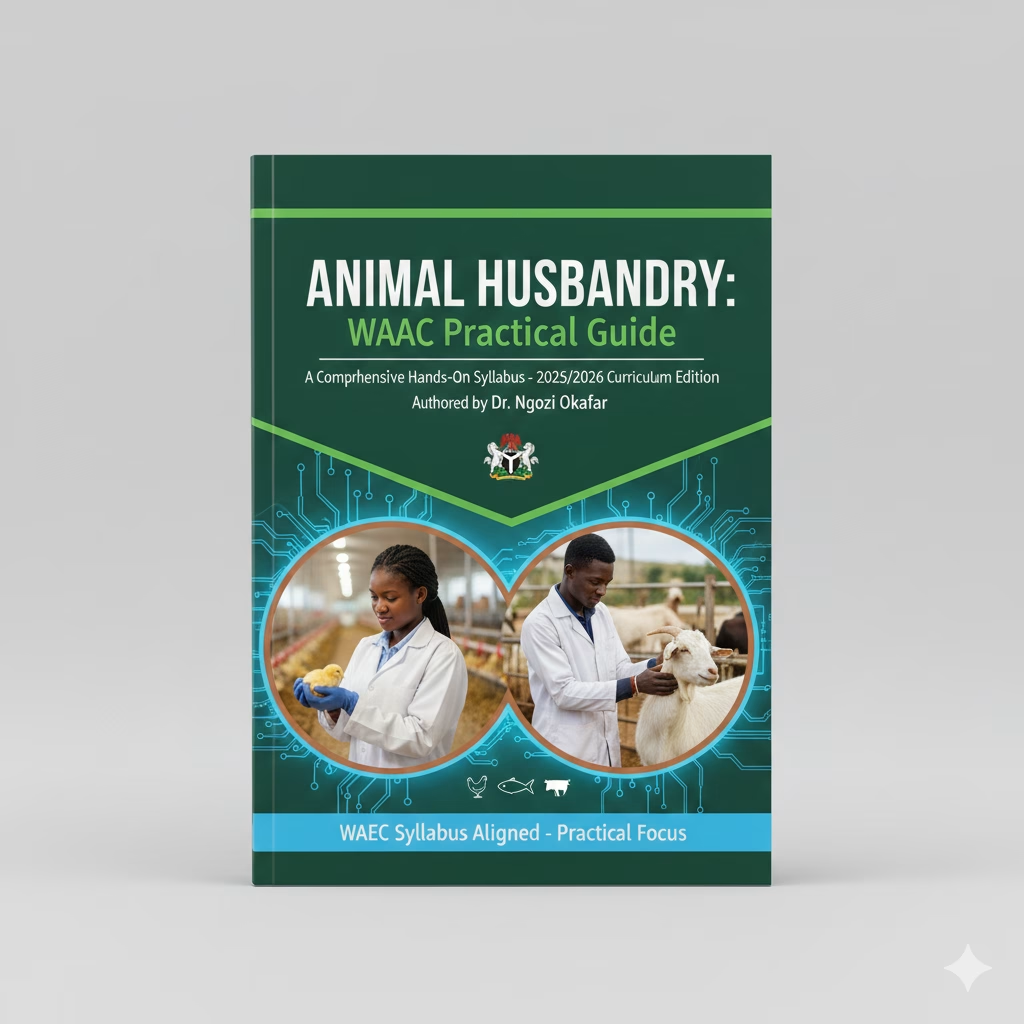
WAEC often presents real animals, animal parts, pictures, or preserved specimens. Below are the most common ones you should know.
1. Farm Animals Commonly Tested
-
Goat
-
Sheep
-
Cattle
-
Pig
-
Rabbit
-
Poultry (chicken, turkey, duck)
You should be able to:
-
Identify the animal
-
State its uses
-
Mention its housing system
-
Identify sex (male/female) where applicable
2. Poultry Specimens
Poultry is a very popular WAEC practical topic.
Common specimens include:
-
Broiler chicken
-
Layer chicken
-
Cock
-
Hen
-
Egg (fertile and infertile)
Possible questions:
-
Differences between broilers and layers
-
Parts of a poultry bird
-
Uses of eggs
-
Signs of a healthy bird
Animal Products and By-Products
WAEC may present animal products for identification.
Common examples:
-
Egg
-
Milk
-
Meat
-
Leather
-
Wool
-
Horns and hooves
You should know:
-
The animal source
-
Uses of each product
-
Economic importance
Tools and Equipment Used in Animal Husbandry
WAEC Animal Husbandry practical often includes farm tools and equipment.
Common Tools You Must Know
-
Feeding trough
-
Water trough
-
Syringe
-
Needle
-
Drenching gun
-
Weighing scale
-
Debeaker
-
Brooder
-
Incubator
For each tool, you should be able to:
-
Identify it
-
State its function
-
Mention where it is used
Animal Housing Systems (Very Important)
Animal housing is a frequent WAEC practical topic.
Common Housing Systems
-
Intensive system
-
Semi-intensive system
-
Extensive system
Poultry Housing Types
-
Deep litter system
-
Battery cage system
You may be asked to:
-
Identify the system
-
State advantages and disadvantages
-
Mention animals suitable for each system
Feeding in Animal Husbandry Practical
WAEC may present feed samples or feed ingredients.
Common Feed Types
-
Concentrates
-
Roughages
-
Supplements
Feed Ingredients to Know
-
Maize
-
Groundnut cake
-
Fish meal
-
Bone meal
-
Palm kernel cake
-
Hay
-
Silage
Be prepared to:
-
Identify the feed
-
State its class
-
Mention its nutritional value
Animal Diseases and Health Management
Animal health questions are common in WAEC practical exams.
Common Diseases WAEC May Test
-
Newcastle disease (poultry)
-
Foot and mouth disease
-
Coccidiosis
-
Mastitis
-
Trypanosomiasis
Signs of Sick Animals
Check out: Digital Technologies Syllabus for Senior Secondary School (Complete Guide)
-
Loss of appetite
-
Dullness
-
Diarrhea
-
Weight loss
Disease Control Methods
-
Vaccination
-
Quarantine
-
Proper sanitation
-
Regular veterinary care
Identification of Sex in Farm Animals
WAEC may ask you to identify male and female animals.
Examples:
-
Cock vs Hen
-
Buck vs Doe (goat)
-
Ram vs Ewe (sheep)
-
Bull vs Cow (cattle)
Learn the physical features that distinguish each.
How WAEC Awards Marks in Animal Husbandry Practical
To score high, you must understand how marks are given.
WAEC usually awards marks for:
-
Correct identification
-
Clear and accurate explanations
-
Proper use of agricultural terms
-
Neat diagrams where required
Wrong spelling, vague answers, or unnecessary explanations can reduce marks.
Common Mistakes WAEC Students Make
Avoid these mistakes during the practical exam:
-
Guessing instead of observing carefully
-
Writing long stories instead of direct answers
-
Mixing up animal tools and crop tools
-
Forgetting basic uses of animals and products
-
Panic due to unfamiliar specimens
Confidence comes from preparation.
Practical Tips to Score High in WAEC Animal Husbandry
-
Visit a farm if possible – Seeing animals physically helps memory.
-
Study past WAEC practical questions regularly.
-
Learn identification first, then uses and functions.
-
Practice drawing simple diagrams of animals and tools.
-
Use correct agricultural terms in your answers.
Recommended WAEC Practical Revision Materials
See now: Pre-Vocational Studies Primary 4 Second Term Scheme: Complete Guide for Teachers and Parents
-
WAEC Agricultural Science past questions
-
School farm practical notes
-
Teacher demonstrations
-
Agricultural science textbooks
-
Online agriculture revision videos
Why Animal Husbandry Practical Is Important
Beyond passing WAEC, Animal Husbandry practical teaches students:
-
Real-life farming skills
-
Basic livestock management
-
Food production knowledge
-
Career foundations in agriculture
It is a subject with both academic and economic value.
Final Thoughts
The Animal Husbandry practical guide for WAEC students is not something to fear. With proper preparation, observation skills, and understanding of common specimens, you can score very high.
Focus on identification, functions, health management, and housing systems, and practice consistently. Remember, WAEC does not test tricks, it tests basic agricultural knowledge applied practically.
Start early, revise smartly, and approach the exam with confidence.


