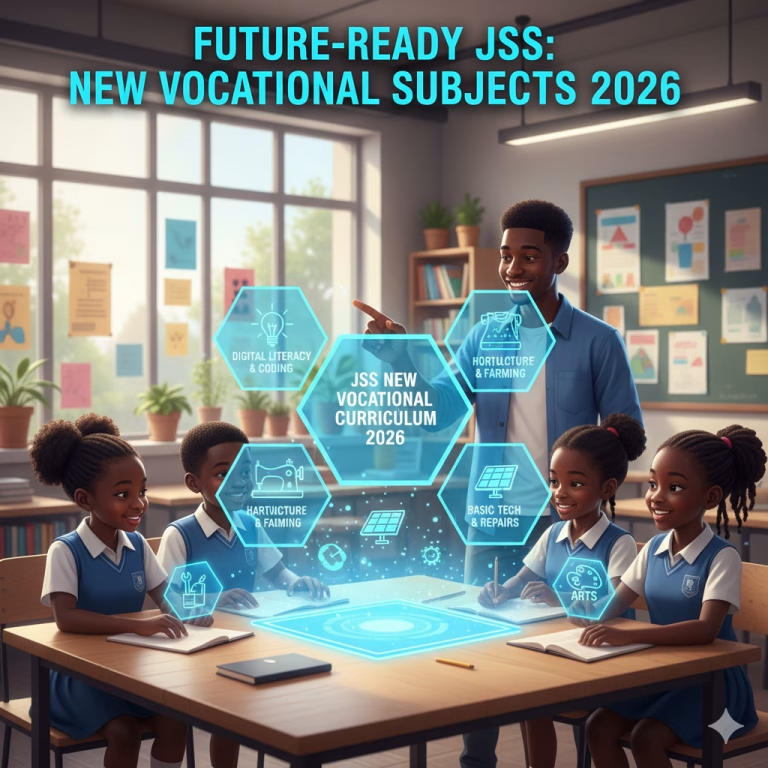
COMPULSORY TRADE SUBJECTS FOR SENIOR SECONDARY SCHOOL 2026: FULL GUIDE FOR NIGERIAN STUDENTS
Trade subjects play a very important role in Nigeria’s senior secondary education system. They are designed to equip students with practical skills, technical knowledge, and entrepreneurial abilities that can be used for employment or self-reliance after graduation.
In recent years, the Nigerian education policy has emphasized skills acquisition and vocational training. As a result, certain trade subjects have become compulsory or strongly recommended at the senior secondary school level.
This article provides a complete and simplified guide to the compulsory trade subjects for Senior Secondary School (SSS) in Nigeria for 2026. It explains what trade subjects are, why they matter, and the major compulsory options available to students.
What Are Trade Subjects in Senior Secondary School?
Trade subjects are vocational and technical subjects that focus on practical skills rather than purely academic knowledge. They prepare students for real-world jobs, entrepreneurship, and technical careers.
Unlike traditional academic subjects, trade subjects emphasize:
• Hands-on learning
• Skill acquisition
• Technical competence
• Self-employment opportunities
In Nigeria, trade subjects are examined by WAEC, NECO, and NABTEB.
Why Trade Subjects Are Important for Senior Secondary Students
Trade subjects are now more important than ever due to rising unemployment and the need for practical skills.
Check out: Digital Technologies Syllabus for Senior Secondary School: Complete Guide for Students and Teachers
They help students:
• Acquire employable skills
• Become self-reliant after school
• Discover talents and interests
• Prepare for technical and vocational careers
• Support national development
Trade subjects also complement academic learning and improve problem-solving abilities.
Are Trade Subjects Compulsory in Senior Secondary School?

According to Nigeria’s education policy, students in senior secondary school are required to offer at least one trade or vocational subject in addition to core academic subjects.
This requirement ensures that every student graduates with at least one practical skill, even if they do not proceed to higher education.
Schools may differ in the specific trade subjects offered, depending on available facilities and teachers.
List of Compulsory Trade Subjects for Senior Secondary School 2026
Below are the major trade subjects commonly regarded as compulsory or approved options for senior secondary students in Nigeria.
Agricultural Science
Agricultural Science is one of the most widely offered trade subjects.
It focuses on:
• Crop production
• Animal husbandry
• Soil science
• Farm tools and machinery
Agricultural Science equips students with food production and agribusiness skills.
Animal Husbandry
Animal Husbandry is sometimes offered as part of Agricultural Science or as a standalone subject.
It covers:
• Rearing of farm animals
• Animal nutrition
• Animal health and management
It is suitable for students interested in agriculture and livestock farming.
Read more: Most Profitable Trade Subjects for Nigerian Students (2026 Career Guide)
Fisheries
Fisheries focuses on fish production and management.
Topics include:
• Fish farming methods
• Fish breeding
• Fish pond construction
• Fish processing
It prepares students for careers in aquaculture.
Home Economics
Home Economics is a popular trade subject, especially among students interested in food, clothing, and family life.
It covers:
• Food and nutrition
• Clothing and textiles
• Home management
Home Economics supports entrepreneurship and life skills.
Catering Craft Practice
This subject focuses on food preparation and service.
It covers:
• Cooking methods
• Meal planning
• Kitchen safety
• Food presentation
It prepares students for catering and hospitality careers.
Fashion Design and Garment Making
This trade subject focuses on clothing production and fashion skills.
Topics include:
• Sewing techniques
• Pattern drafting
• Fabric selection
• Garment construction
It supports self-employment in the fashion industry.
Auto Mechanics
Auto Mechanics teaches students about vehicle systems and maintenance.
Topics include:
• Engine systems
• Vehicle servicing
• Tools and workshop safety
It prepares students for automotive careers.
Metal Work
Metal Work focuses on fabrication and machining.
Topics include:
• Metal tools and machines
• Welding and fabrication
• Safety practices
It is suitable for mechanical and industrial skills.
Wood Work
Wood Work teaches carpentry and furniture making skills.
Read more: How Many Subjects Are Compulsory in WAEC 2026? Complete Guide
Topics include:
• Wood materials
• Joinery techniques
• Tool handling
It prepares students for construction and furniture businesses.
Electrical Installation and Maintenance
This subject focuses on electrical wiring and maintenance.
Topics include:
• Electrical tools
• Wiring systems
• Safety rules
It is useful for technical and engineering careers.
Solar PV Installation
Solar PV Installation is a modern trade subject reflecting Nigeria’s energy needs.
It covers:
• Solar energy principles
• Installation of solar systems
• Maintenance and safety
It supports renewable energy careers.
Computer Studies / ICT
Computer Studies is increasingly considered a compulsory trade subject.
It focuses on:
• Basic computer operations
• Digital literacy
• ICT applications
It prepares students for technology-driven careers.
Entrepreneurship
Entrepreneurship teaches business skills and innovation.
Topics include:
• Business planning
• Marketing
• Record keeping
It helps students start and manage small businesses.
How Schools Choose Compulsory Trade Subjects
Not all schools offer every trade subject.
Selection depends on:
• Availability of teachers
• Workshop facilities
• School location
• Student interest
Students are usually required to choose at least one from the available options.
How Trade Subjects Are Examined
Trade subjects are examined by:
• WAEC
• NECO
• NABTEB
Most trade subjects include:
• Theory papers
• Practical examinations
Practical performance carries significant marks.
Read also: WAEC 2026 Subject Combinations for Nursing: Complete Guide for Aspiring Nurses
Benefits of Offering Trade Subjects in Senior Secondary School
Trade subjects help students:
• Gain practical confidence
• Reduce dependence on white-collar jobs
• Develop creativity and innovation
• Prepare for technical education
They also support Nigeria’s skill development goals.
Frequently Asked Questions
How many trade subjects must a student offer?
At least one trade subject is required.
Are trade subjects compulsory for WAEC?
Yes, candidates must offer at least one approved trade or vocational subject.
Can trade subjects replace science subjects?
No, they complement but do not replace core academic subjects.
Which trade subject is best?
The best trade subject depends on the student’s interest and career goals.
Conclusion
Compulsory trade subjects in Senior Secondary School for 2026 reflect Nigeria’s focus on skills acquisition and self-reliance. Every student is expected to offer at least one trade subject to graduate with practical skills.
From Agricultural Science and Home Economics to Solar PV Installation and Computer Studies, trade subjects prepare students for employment, entrepreneurship, and further technical education.
Choosing the right trade subject helps students build confidence, discover talents, and secure a better future. Trade education is not just an academic requirement; it is a pathway to lifelong skills and independence.